

Delivering High-Performance Airports with Envision
16-February-2026

The Runway 17L-35R Complex Pavement Rehabilitation & Electrical Upgrades Project at Denver International Airport (DEN).
At any given stage of a project, airport infrastructure professionals are tasked with making disciplined decisions across planning, design, and construction to enhance long-term performance. The Envision Framework gives decision-makers a structured way to evaluate these choices across environmental, social, and economic dimensions. Designed for use across all types of civil infrastructure, the framework aligns well with the sustainability approaches already used in the airport sector, helping project teams integrate these considerations into capital delivery without compromising operational or regulatory requirements.
A Decade of Momentum 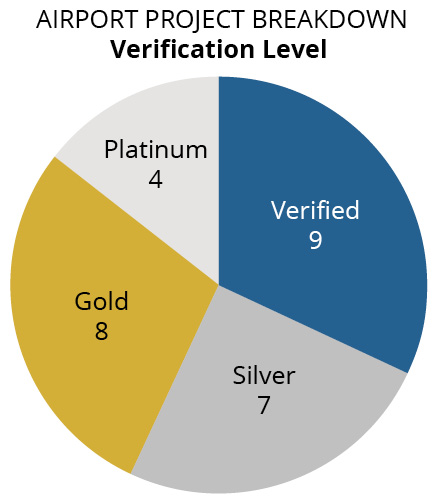
The Envision verification program includes 69 airport projects spanning roads, stormwater systems, parking facilities, and transit connections like rail and light rail. Of these, 28 projects have achieved verification, reflecting steady momentum as airport owners and project teams increasingly use third-party review to validate outcomes and strengthen accountability.
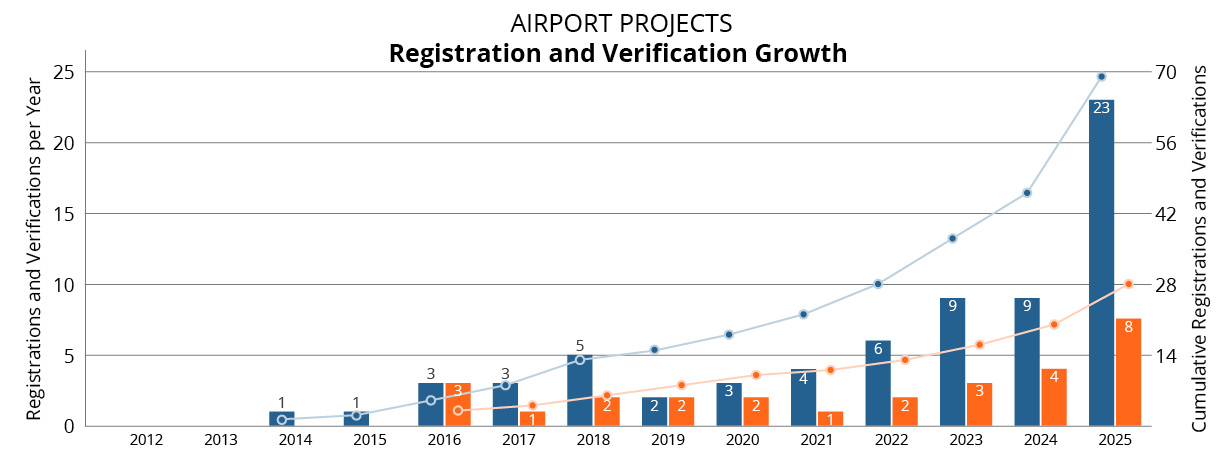
Growth over time tells a clear story. The first airport project entered the program in 2014, with the first verification following in 2016. Activity has accelerated in recent years, culminating in 23 new registrations and 8 verifications in 2025 alone, illustrating that sustainability considerations are becoming embedded earlier and more consistently in aviation infrastructure delivery.
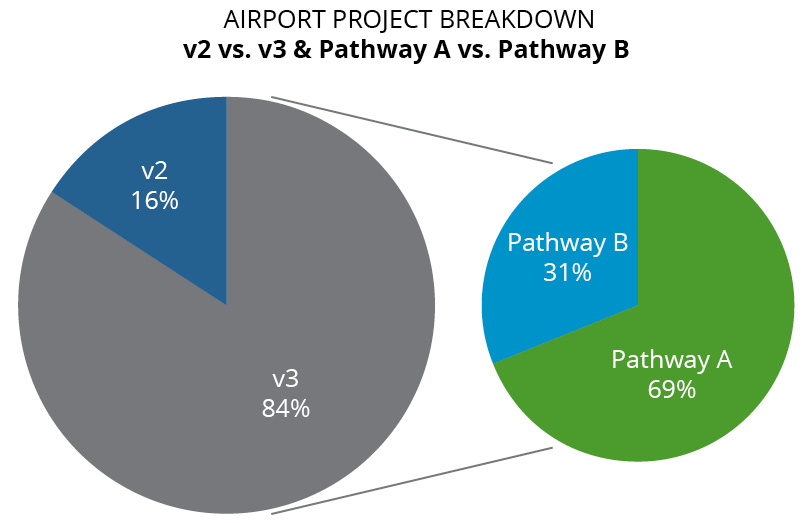
Among registered airport projects, 16% used version 2 (v2), while 84% are using version 3 (v3). Within v3, most teams opt for Pathway A (70%), pursuing verification after major design decisions are finalized and then confirming outcomes through a post-construction review. The remaining 30% follow Pathway B, seeking verification near or after construction completion.
Together, these trends illustrate a program that is not only expanding in volume but also deepening in rigor to give airport stakeholders clearer insight into performance and a stronger foundation for continuous improvement.
From Touchdown to Curbside: Envision Across Airport Infrastructure
The selection of projects below illustrate how the framework is being applied across both airside and landside infrastructure, highlighting tangible, measurable sustainability outcomes.
Serving both passenger traffic and one of the world’s largest air cargo hubs, this project marks the first FAA-approved use of a sustainable concrete mix design on an airfield, integrating carbon-capture technology directly into pavement materials. Using in-situ carbon dioxide mineralization technology, technical teams introduce post-industrial carbon dioxide into freshly mixed concrete, where it converts to a solid mineral, calcium carbonate. The project also delivers multiple other sustainability gains like on-site solar photovoltaic generation with battery storage, supporting operational energy needs.
This project focused on the rehabilitation of a major runway complex and associated electrical systems at one of North America’s largest airports. Envision recognition reflected pavement system improvements that prioritize sustainability, improved reliability of airfield lighting, and long-term asset performance considerations integrated into construction planning. Additional benefits include reduced maintenance disruptions and improved lighting energy efficiency, aligning with DEN’s enterprise sustainability goals. The project is part of DEN’s long-range Capital Improvement Program, helping ensure capacity and resilience through 2050.
Philadelphia International Airport – Taxiways Y & U Rehabilitation (Envision Verified, 2024)
The rehabilitation of Taxiway Y and U at PHL returned the facilities’ pavement, markings, signage, lighting, and electrical infrastructure to a state of good repair, and reconfigured intersections to a new geometry consistent with FAA standards. Operated by the City of Philadelphia Department of Aviation (DOA), this project was recognized for strong leadership and collaboration, extensive recycling of demolition materials, and a net reduction in pavement area through the project site, with the removed excess areas returned to vegetation. Built to accommodate expected future demand, the new design of Taxiways Y and U can accommodate ADG VI aircraft, enhancing safety for larger planes not commonly operating at PHL.
Northeast Philadelphia Airport – Taxiway L Pavement Rehabilitation Phase 1 (Envision Silver, 2025)
This project will address Taxiway L’s pavement distress and outdated geometry at Northeast Philadelphia Airport, which is also under City of Philadelphia Department of Aviation and functions as a reliever airport for the region. By creating a cement-treated base comprised of asphalt milling and existing aggregate base from the site, the team was able to reduce costs associated with bringing in new construction materials. Moreover, any asphalt paving materials not incorporated into the new base had to be recycled and not disposed of in a landfill. Additionally, the project is converting obsolete pavement to landscaped areas and upgrading to energy-efficient LED airfield lighting.
This project rehabilitated a runway and taxiway system that is critical to maintaining continuous airport operations. The work included more than 21,500 square yards of 16-inch-thick and nearly 60,000 square yards of 18-inch-thick concrete pavement replacement, coupled with a myriad of spall repairs, joint sealant repairs, and application of all new pavement markings. Sustainability highlights include high rates of material reuse, construction waste diversion, and phased construction strategies that preserved operational redundancy; there was also a successful focus on preserving water resources. A water conservation plan ensured inspection and maintenance of leak-free tanks, hoses, and fittings, and the use of recycled water for dust control, equipment washing and manufacturing concrete.
ATL South Deicing Facility (Envision Verified, 2025)
The project incorporated sustainability principles into project selection and identification through an assessment of sustainability indicators, an alternative analysis, and early planning assessments that considered the broader impacts of the project on long-term sustainability and the airport community. Owned and operated by Hartsfield–Jackson Atlanta International Airport, which previously earned Envision Silver for the Taxiway and Runway 9L Pavement Replacement Project (2019), this project reduces the risk of systemic failure by expanding deicing capacity during inclement weather, thereby reducing potential impacts to the broader air traffic system from delays and cancellations. Another noteworthy example: by exceeding minimum drainage standards, the stormwater system will reduce airfield and landside flood risk, improve airfield safety, and enhance pavement durability.
Fulfilling long-standing goals for improved safety and capacity, this project centered on rebuilding a critical DTW runway and taxiway system first constructed in the 1950s. The project team planned the work to maintain nearly all materials on site during construction and to reduce future maintenance through LED lighting and other measures. Verified under Envision Version 2, the project was recognized for achievements across the framework including contributing to community workforce development, whole systems design and delivery, and high resilience and adaptation to long-term climate change.
Phoenix Sky Harbor International Airport – Sky Train Phase 2 (Envision Gold, 2020)
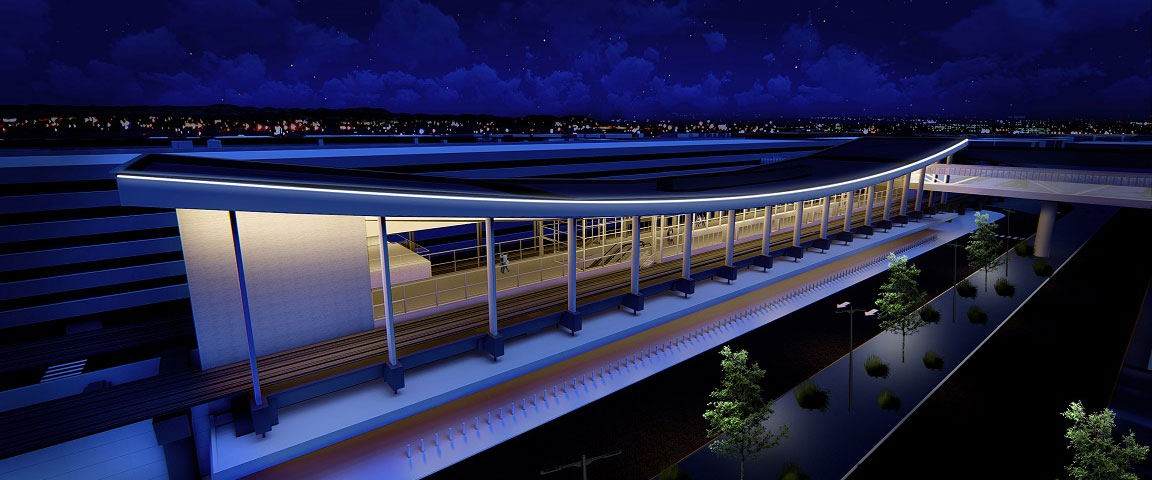
The extension of the Sky Train automated people mover improved connectivity between terminals, parking, and transit at Phoenix Sky Harbor International Airport. There were several Envision-aligned achievements including reducing operational energy use, improving passenger mobility within the airport system, and reducing internal vehicle trips. It was estimated that the project would help lower the daily vehicle count by 20,000. The Envision rating confirmed the project’s approach to the design and delivery of the project met a high standard for sustainability, with impressive achievements across Envision categories.
LaGuardia Airport – New Terminal B (Envision Platinum, 2019)
Completed in 2022, the redevelopment of Terminal B was one of the most complex terminal projects undertaken in recent years in the U.S. A $4-billion, 1.35-million-square-foot facility, the terminal is approximately 50% larger compared to the old terminal which dated from the 1960s. The first Envision Platinum project under Version 3, it was recognized for its sustainability performance across multiple areas of the framework including resilience, stakeholder engagement, community benefits, and long-term operational value. Terminal B also incorporated energy-efficient building systems, improved passenger wayfinding, and community-focused public spaces, setting a benchmark for sustainable airport terminal design.
San Diego International Airport – Terminal 2 Parking Plaza (Envision Gold, 2019)
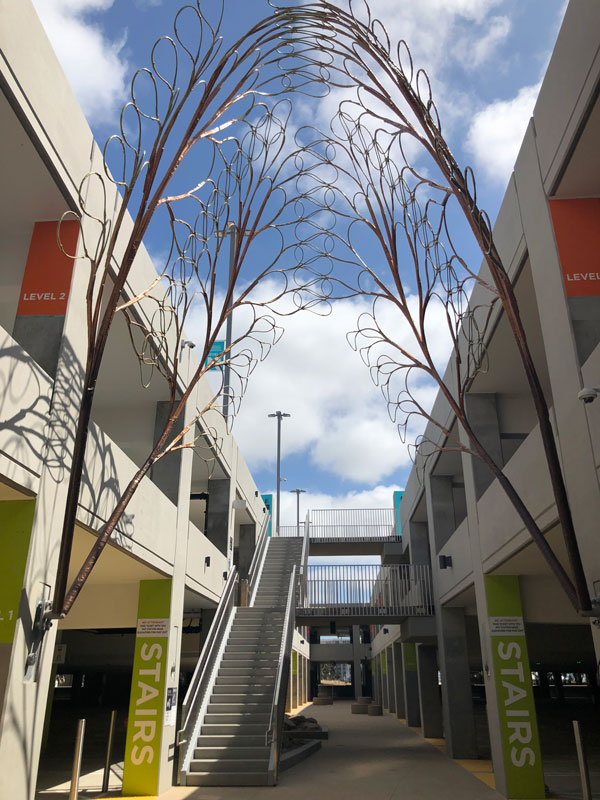 The Terminal 2 Parking Plaza provides approximately 3,000 parking spaces directly connected to the terminal, with integrated pedestrian access and transit connectivity. Prioritizing speed, safety and convenience, the project provides improved vehicle circulation and state-of-the-art parking guidance and wayfinding systems such as integrating technology to allow motorists to easily locate the nearest available parking spaces, reserve spaces in advance, and streamline the payment process. The project integrates public viewing areas that offer sweeping, unobstructed views of San Diego Bay and downtown. The project is owned and operated by San Diego International Airport, which earned Envision Gold for its $200-million Airside Improvements Project (2024).
Raleigh–Durham International Airport – Park Economy 3 Expansion Project (Envision Platinum, 2025)
This expansion project addressed growing demand for economy parking while tackling stormwater management challenges typical of large paved facilities. This project is setting a new benchmark in sustainable stormwater management with the largest submerged gravel wetland system of its kind in North Carolina. The system includes a subsurface treatment pond filled with gravel substrate material, topped with wetland soil, and seeded with native wetland plants. This approach not only filters pollutants and reduces sedimentation, but also mitigates flow rates, reduces downstream flood risks, and avoids creating wildlife attractants near the airport. In addition, priority was given to passenger safety and comfort through a variety of intentional and sustainability-driven enhancements. These include reducing the walking distance between bus stops, providing covered walkways for protection from adverse weather, and improving pedestrian safety with blue light emergency phones, illuminated pathways, and clear wayfinding signage.
Portland International Airport – Rental Car Quick Turnaround Facility (Envision Gold, 2021)
This Rental Car Quick Turnaround Facility was designed and built to streamline rental car fueling, cleaning, and inspection operations. Alongside this core objective, the project incorporates a highly water-efficient design that significantly reduces potable water usage compared to traditional rental car facilities. Rainwater harvested during Portland’s rainy season supplies much of the facility’s water demand, while an on-site well tapping a non-potable aquifer supports operations during the dry season. To maximize energy savings, the design team incorporated automatic lighting controls whenever possible, with interior lighting controlled by occupancy sensors.
Envision Alignment at the Owner Policy Level
Envision is increasingly being incorporated into airport owner policies and capital planning frameworks. For example, at Denver International Airport, Envision has been adopted at the policy level, with horizontal infrastructure projects exceeding $10M in total construction cost expected to apply the framework. This approach builds on lessons learned from individual Envision-verified projects and supports consistent, organization-wide consideration of sustainability and resilience outcomes.
Similar policy-level adoption has occurred at other agencies such as the Port Authority of New York and New Jersey (PANYNJ). For examples and guidance on owner-led adoption of Envision in the airports sector, we invite you to consult ISI’s Envision & Airports: Insights, Resources, & Opportunities Guide (AIRO Guide).
▸ Users are also invited to consult the Envision Policy Map for policies and other documents that require, incentivize, or encourage the use of Envision in infrastructure projects at various government levels.
Conclusion
Airports are among the most complex and consequential infrastructure systems in the world, and these projects demonstrate how Envision — by providing a structured way to evaluate the full spectrum of infrastructure sustainability indicators — is particularly well suited to this sector. Through the application of Envision, each project achieved high levels of performance, efficiency, and resilience, while also enabling airports to clearly demonstrate their contributions to local, regional, and global sustainability goals.
Related: Two Years Post AIRO Guide: How the Aviation Industry is Using Envision Today by guest author Courtney Gantt.
Text: Conrad McCallum; Charts and images: ISI, Denver International Airport, Phoenix Sky Harbor International Airport.