
How Two U.S. Ports Embed Sustainability into Infrastructure Decision-Making
18-September-2026
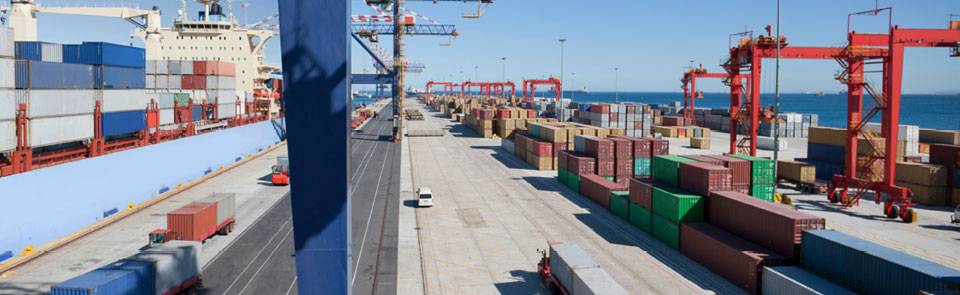
Ports are increasingly being asked to do more than move goods efficiently. They must also navigate evolving climate risks, support community and environmental goals, and make the infrastructure investments that can best deliver value for decades to come. As a result, many port authorities are seeking practical approaches that help teams make more informed and sustainable decisions throughout the project lifecycle.
Two U.S. ports recently shared how they have applied Envision to meet these challenges. Scott Gallic, Port of Long Beach, and Emily Federer, Port of New Orleans (Port NOLA) discussed how the framework supports their long-term sustainability and operational goals while fostering collaboration and more informed decision-making. The following article draws on their insights and experiences (comments have been edited for length).
Applying Envision to a Future-Focused Terminal
Back in 2016, Emily Federer, Port NOLA’s Director of Sustainable Development, had just earned her ENV SP following an ASCE conference in New Orleans. She recalls being eager to apply Envision on a port project while also feeling somewhat intimidated by navigating the framework and understanding how it aligns with a port project’s priorities.
But the early planning for the Louisiana International Terminal (LIT) Project provided a moment of clarity. Federer recognized that many of the sustainability initiatives planned for the $1.8-billion project already aligned with Envision. Designed to expand the port’s capacity and strengthen the region’s role as a global trade gateway, the project provided an opportunity to apply the framework in a meaningful way. Rather than introducing an entirely new process, Envision helped strengthen and organize sustainability initiatives already in progress.
“If we consider that LIT may be in place more than 100 years from now, technology, energy and operations may look entirely different than what we are seeing today. By using Envision, I would hope that we can at least build some flexibility into our future terminal to make these transitions easier, more resilient and sustainable for the future.”
— Emily Federer, Port NOLA’s Director of Sustainable Development.
Previous experience with third-party sustainability programs also helped shape her team’s openness to the framework. After joining Green Marine in 2014, the port became the eighth U.S. port to earn Green Marine certification the following year. This demonstrated the value of an external program that encourages continuous improvement while providing credibility through an independent verification process. “Once learning more about Envision, we realized the Institute for Sustainable Infrastructure is another resource that can help us advance our infrastructure practices beyond the status quo and build projects better.”
There was no expectation to master every aspect of Envision overnight. Instead, with strong early support, Federer further introduced Envision to the project management team, engineers, and business partners, gradually building awareness and buy-in with the goal of pursuing verification for LIT. Five members of the project management team independently completed a pre-assessment checklist. She reviewed the results, comparing average scores and areas where assessments differed. Together, they discussed the differences and how they might be able to achieve various levels within each of the credits, particularly where scores varied the most.
The exercise revealed a key Envision strength: helping teams surface overlooked opportunities and address them before a project moves forward. It also highlighted the value of taking a longer-term perspective as LIT moved through the planning and design phase. Federer notes that some Port NOLA assets, including bridges, have been in service for more than 100 years, and infrastructure being planned and built today may need to serve future generations for just as long.
Federer offers this advice to other ports taking up Envision. “Work with your team to get early buy-in from all parties and consider the outcomes and changes that may come from using Envision early in the process. Build consensus about what the team and leadership expect to achieve by using the Envision process for planning and evaluation of the project.”
By creating a structured process for evaluating sustainability opportunities early, the team was able to align stakeholders around shared goals and identify opportunities that may otherwise have been passed over.
Using Envision in Port-Wide Infrastructure Planning
At the Port of Long Beach, where nearly 10 million TEUs pass through annually, sustainable infrastructure has long been a priority. Through the Program Management Division, POLB embeds sustainable practices throughout its engineering and project delivery processes, advancing long-term ecological stewardship and compliance with environmental regulations.
Scott Gallic, ENV SP, LEED AP, is the Sustainability Coordinator at POLB and a longtime champion of Envision, which has grown to become an integral part of broader sustainability efforts at the port. POLB used Envision to advance and connect existing sustainability policies and initiatives, including the Green Port Policy, Clean Air Action Plan (CAAP), and Zero Emissions, Energy Resilient Operations (ZEERO) policy. Over time, Envision has evolved from a project-level sustainability framework into a tool that helps embed sustainability considerations across planning, project delivery, and asset management activities.
“Envision has served as a common language for our project teams to communicate throughout the capital project life cycle connecting our project teams in the discussion and incorporation of sustainability best practices and industry standards. It serves as a flexible means of encouraging our teams to strive for the highest standards while balancing scope of work, schedule and budget.”
— Scott Gallic, Sustainability Coordinator, POLB. Photo: Terminal Island Wye Track Realignment.
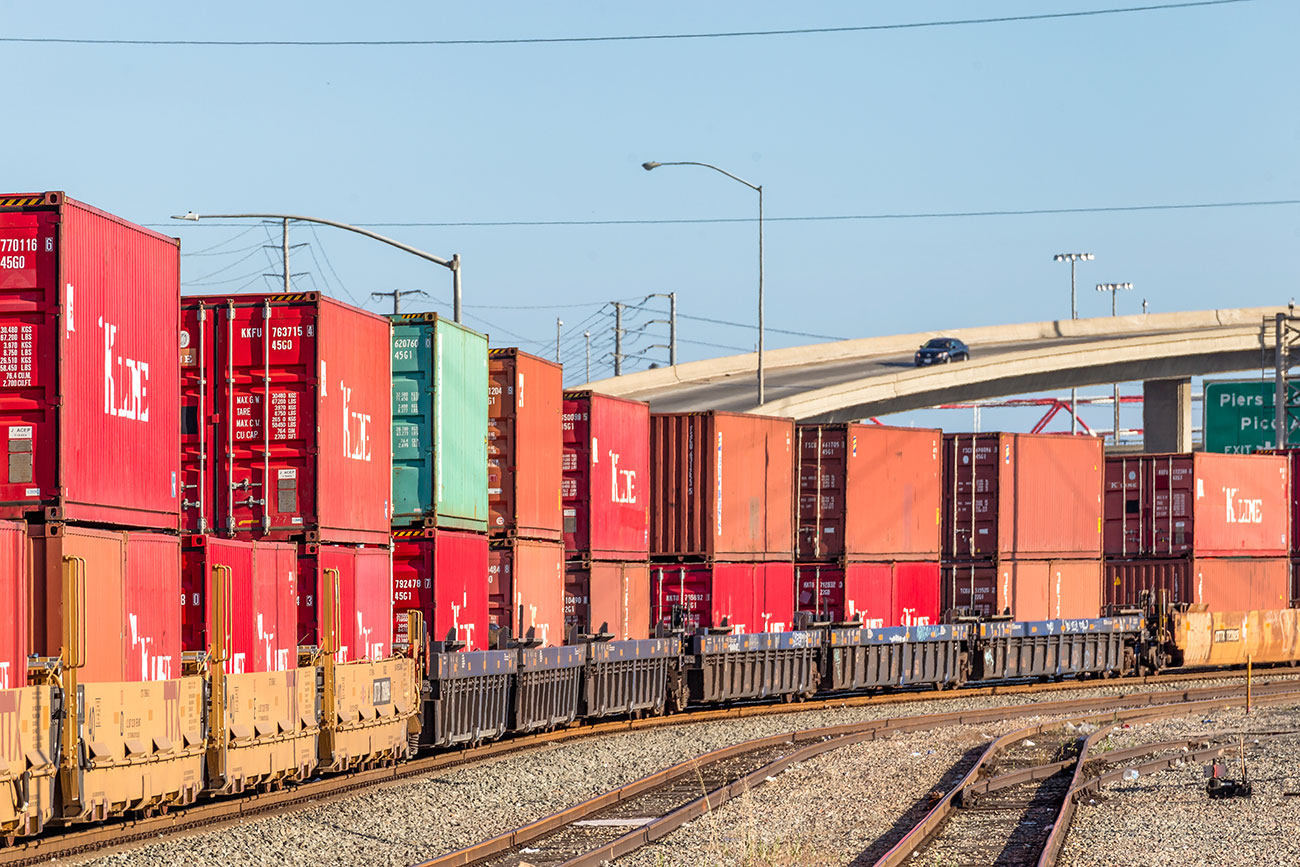
While staff had been introduced to the framework over the years, a key moment in POLB’s Envision journey was the development of an implementation process flowchart for sustainability programs, a tool that uses both LEED and Envision frameworks to guide projects. Other milestones followed, including embedding the framework into POLB’s engineering process and project delivery manual. There is now a suite of registered projects actively pursuing verification, and one has already achieved verification: Terminal Island Wye Track Realignment. Completed in 2024, the project supports POLB’s goal of dramatically increasing the amount of cargo moved by on-dock rail versus truck, thereby reducing congestion and emissions.
Gallic offers other examples of how Envision is supporting POLB’s sustainability efforts. One example is Envision’s focus on infrastructure integration, which is particularly relevant as the port continues to implement an Enterprise Asset Management System – a program focused on preventative maintenance and attribute tracking across its assets for port staff and stakeholders. Envision strengthens that initiative by ensuring long-term sustainability considerations are at the center of decision-making.
Another example is the Envision Climate & Resilience credits, which “continually focus our project teams on climate resilience in our design, while building on port plans addressing sea level rise and inundation. These Envision credits also contributed to the creation of a Hazard Vulnerability Assessment and Adaptation Plan (HVAAP) to further address resilience against a broader set of acute and chronic hazards.”
What advice does Gallic have for other ports considering Envision? He notes that the verification step, while optional, is a valuable commitment that can provide learning opportunities for everyone involved. “The lessons learned from just one project can percolate across your organization in your approach to individual sustainability credits. It serves as a means to validate your assumptions or help course correct any errant assumptions as well.”
While their approaches differ, Port NOLA and the Port of Long Beach shared a common lesson: Envision works best when it becomes part of an organization’s broader decision-making process. From early planning conversations to long-term asset management and resilience planning, both found that the framework helped teams think more holistically about infrastructure performance and future needs.
In Case You Missed It: Envision Maritime Forum Presentation
At the Envision Maritime Forum meeting on February 16, Giles Pettifor, Director of Environment and Sustainability for the Port of Hueneme, challenged participants to think differently about how ports prepare for climate impacts that are already occurring and help lead their region toward climate readiness and long-term resilience. Pettifor spoke with conviction about the importance of preparing for a future shaped by rising temperatures and changing storm intensity and frequency, outlining the scenarios and strategies ports should consider as they adapt to this new reality. Pettifor highlighted the twin threats posed by sea level rise and storm flood inundation and how the compounding impacts can lead to operational paralysis and long-term disruption of operating models. “The knock-on effects can ripple all the way up your supply chain and have effects at every single step — and have needs for fixes and costs and different timelines as you work up your supply chain. These types of cascading hazards are really the new normal, and it’s really the urgency that all of us as resource and asset managers have to begin to build to.” Visit the Envision Maritime Forum Page.