
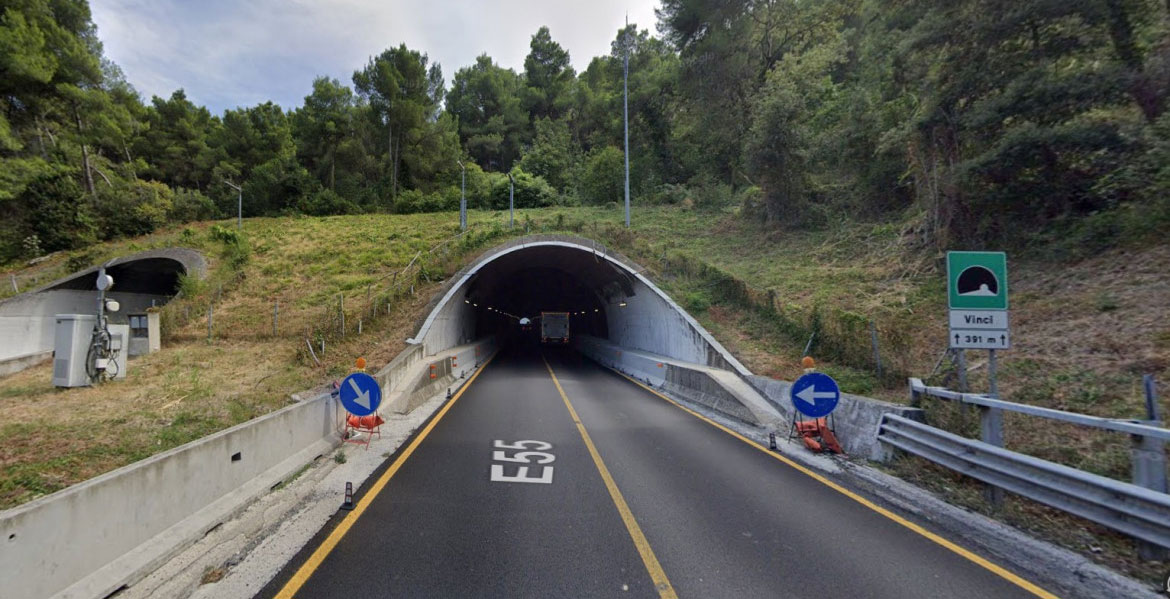
The Vinci Tunnel project in Italy has achieved Envision Gold verification from ICMQ, combining long-term safety, resilience, and environmental performance on an innovative structural renewal project.
A 400-metre-long southbound tunnel along the A14 Bologna–Taranto highway in Italy’s Marche region sustained damage from a fire in 2024. A plan was developed to renew the tunnel’s structural capacity and resilience and provide a new 50-year nominal service life. It became the first highway rehabilitation and maintenance project in Italy to achieve Envision Gold during the design phase, marking a significant milestone for the Autostrade per l’Italia Group (ASPI) and its efforts to advance a new model of infrastructure sustainability across the asset lifecycle.
The verification recognizes the work of Tecne, the Group’s engineering company, and represents a further step forward in the rehabilitation and renewal of existing tunnels.
The Vinci Tunnel project demonstrates how the rehabilitation of existing infrastructure can maximize opportunities to create environmental, social, and economic value while providing a model for sustainable infrastructure renewal.
A Strategic Project Within the Tunnel Assessment Plan
This project became part of the broader strategy adopted by the Autostrade per l’Italia Group to enhance the efficiency, safety, and resilience of its network. Within this framework, the Tunnel Renewal Strategy (TRS) provides a methodology for identifying the most appropriate interventions based on the actual condition of tunnel linings and operational requirements.
After a motor vehicle accident in the tunnel near the town of Cupra Marittima caused a fire in April 2024, emergency safety measures enabled the tunnel to reopen to traffic quickly while longer-term structural assessments were undertaken. Detailed assessment, design, and planning activities were also launched to define the most appropriate long-term structural renewal solution. These efforts led to the start of renewal works in February 2026, coordinated with the final repairs associated with the fire damage to optimize construction activities.
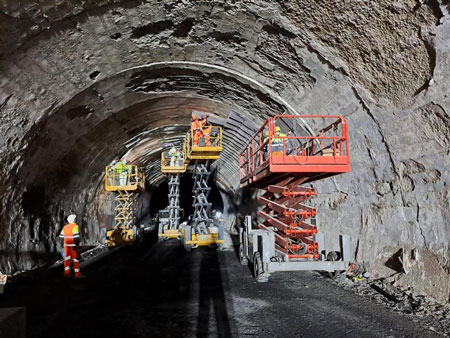
For Vinci Tunnel, an intervention typology called C2 was selected — a solution involving the construction of a new structural lining through cast-in-place concrete using a movable formwork system. The approach enables rapid construction while maintaining high safety standards for workers and allowing traffic to pass during designated periods.
The rehabilitation was designed around a 50-year service life, ensuring high levels of structural safety and waterproofing performance. The selected solution was supported by extensive inspection and investigation work that highlighted the deficiencies in the existing lining and confirmed the need for a comprehensive structural intervention.
The Role of Envision Within the Tunnel Assessment Plan
The Envision verification of Vinci Tunnel forms part of the methodological framework established through the Tunnel Assessment Plan. The plan provides a structured model for planning, evaluating, and selecting renewal interventions for existing tunnels.
The plan incorporates a tool known as Tunnel Refurbishment and New Decision-Making Strategies (TR&NDS), which enables the analysis of the full range of available maintenance and renewal strategies, from extraordinary maintenance and strengthening interventions to more complex structural rehabilitation solutions. The objective is to identify the most appropriate alternative based on technical, environmental, and performance criteria across a series of standardized intervention options.
The analysis revealed that the C2 TRS solution would yield the best long-term outcome when viewed through a broad lens encompassing economic, environmental, and social considerations.
 Preliminary Assessment Using the Envision Framework
The project underwent a preliminary assessment, using the Envision Framework as a reference both for comparing the various intervention typologies contemplated within the Tunnel Assessment Plan and for evaluating technical and technological solutions. The assessment placed special emphasis on environmental conditions and the safety of workers and tunnel users.
The assessment extended beyond the project itself and focused on the design methodology. For each intervention typology included in the Tunnel Assessment Plan, potential impacts related to safety, resource management, energy consumption, resilience, quality of life, and environmental stewardship were analyzed against Envision credits.
This process helped identify and strengthen aspects of the C2 intervention that improve resource efficiency, ensure service continuity, increase safety for users and workers, and minimize environmental impacts. This prepared the ground for a design aligned with the highest performance levels defined by Envision.
Envision Verification Results
The Vinci Tunnel project achieved significant results across the Envision categories by integrating sustainability-focused design solutions throughout the infrastructure lifecycle. Key outcomes include:
- • Quality of Life – Project decisions aimed to improve safety conditions for both workers and motorists.
- • Leadership – The project team aligned with the sustainability policies of the Autostrade per l’Italia Group, adopted stakeholder-inclusive decision-making processes, and formalized agreements with public authorities and institutions. A dedicated Sustainability Management Plan further supported these efforts.
- • Resource Allocation – The project focused on efficient management of materials, energy, and waste, including the use of recycled materials, low-carbon solutions, reductions in lighting-related energy consumption, and waste recovery through local treatment facilities.
- • Natural World – Particular attention was paid to confining all rehabilitation work to the existing tunnel footprint, avoiding impacts on land use and surrounding ecosystems.
- • Climate and Resilience – The project is designed to strengthen infrastructure resilience and support long-term service continuity while reducing greenhouse gas emissions through a Life Cycle Assessment (LCA) approach.
Taken together, these results demonstrate a high level of maturity in resource management, energy efficiency, and environmental impact reduction, confirming the adoption of an integrated sustainability approach from the earliest stages of project development.
 Specific Highlights of the Project’s Environmental, Energy, and Resilience Performance
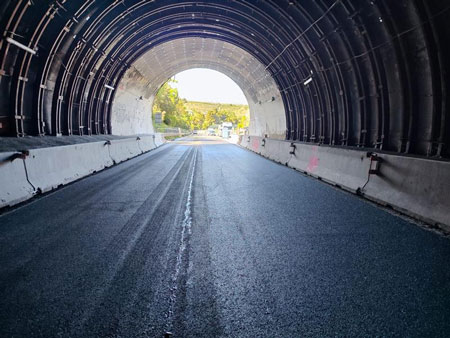
The sustainability approach is reflected in the selection of construction materials and techniques designed to achieve a 35% reduction in embodied carbon compared with traditional solutions, together with the recovery of 99% of construction waste through local supply and treatment chains.
The selected construction solutions also increase the durability of the new lining and improve long-term structural performance, helping to reduce future maintenance needs. In addition, new technological systems have been introduced to ensure service continuity under critical conditions, further strengthening resilience and safety.
From an energy perspective, the project is expected to achieve a 57% reduction in lighting-related energy consumption through the installation of LED lighting systems, while 100% of operational energy demand will be supplied through certified renewable energy sources.
Construction activities will likewise remain within the motorway right-of-way, avoiding temporary occupation of natural or green areas. All activities will remain confined within the existing tunnel footprint, minimizing impacts on the surrounding landscape.
Sustainability Management, Governance, and Stakeholder Engagement
The design for the project was the result of continuous coordination among designers, local authorities, and stakeholders, including the relevant Motorway Operations Directorate (Direzione di Tronco), through a collaborative decision-making process.
This approach was formalized through the Sustainability Management Plan, which serves as the operational framework for defining objectives, monitoring performance, and reporting sustainability achievements throughout project delivery.
Title: Assessment Gallerie – Autostrada A14 – Galleria Vinci – Canna DX Direzione Taranto
Location: Cupra Marittima, Province of Ascoli Piceno, Italy
Envision Rating: Gold
Envision Award Date: December 2025
Envision Version: v3
Project Owner: Autostrade per l’Italia Group
Project Sector: Transportation
Project Type: Tunnel
Lead Envision Firm: Owner-led project
Total Estimated Cost: 20.700.000,00 € (20.7M USD)
Project Status: Under construction (completion expected in 2027)
ICMQ Envision Website: I progetti – Envision