Posts

COMMUTER RAIL: Lucien L’Allier Station

Strong performance across multiple areas of the Envision sustainability framework

ISI is excited to announce that the Rehabilitation of Gare Lucien L’Allier in Montreal has earned the Envision Silver Rating for sustainable infrastructure. Owned by Exo, the public agency responsible for managing the commuter train, suburban bus, and paratransit networks in the Greater Montreal area, the project replaced four platforms that had reached the end of their service life, added an overhead canopy structure, and rehabilitated other infrastructure and systems, delivering a forward-looking facility that better addresses the needs of the community. With the Envision Silver designation, the project’s diverse and long-term sustainability achievements have been recognized and validated through an independent, thirty-party evaluation processed managed by ISI.

Quotes:

“Through this innovative project, exo is reiterating its commitment to a more sustainable and inclusive future while also reinforcing its belief that public transport projects can be forward-looking and affordable,” said Alexandre Eyquem, Senior Director, Asset Management, Operations, Exo

“As an engineer and, above all, a member of this team, I am extremely proud to see this project achieve Envision Silver certification—one of the first of its kind in Quebec—a recognition that reflects our collective commitment, innovation, and technical excellence in delivering sustainable infrastructure that creates lasting positive impacts for our communities and the environment,” said Ian Olechnowicz, Partner and Senior Vice President, Buildings (Quebec and Atlantic), CIMA+.

“Congratulations to the entire project team on earning the Envision Silver Award for the Gare Lucien L’Allier Project,” said Anthony Kane, President & CEO of ISI. “By delivering on the goals of improved accessibility, mobility, safety, and passenger experience, the revitalization of this important commuter hub within Montreal’s downtown core demonstrates strong leadership in the public transportation sector.”

Gare Lucien-L’Allier serves as the final downtown terminal for three exo commuter lines and offers transfers to the Metro and various bus routes managed by Société de transport de Montréal (STM). Located next to the Bell Centre, the largest indoor arena in Canada, the station serves approximately 2.4 million passengers each year. The project delivered new platforms and an overhead canopy structure, along with system upgrades to meet updated exo and accessibility standards. In addition, Track 6 was extended to improve operational flexibility and traffic flow, and two new emergency exits were added.

These facilities were designed and built with a planned service life of 40 years, requiring careful consideration of the project’s long-term sustainability as well as integration with adjacent infrastructure and systems within a dense urban environment.

Read about the verified sustainability achievements on the Gare Lucien L’Allier Project below:

LIGHT RAIL TRANSIT INFRASTRUCTURE: Federal Way Link Extension


Project expands light rail from Seattle-Tacoma International Airport to Des Moines, Kent, and Federal Way

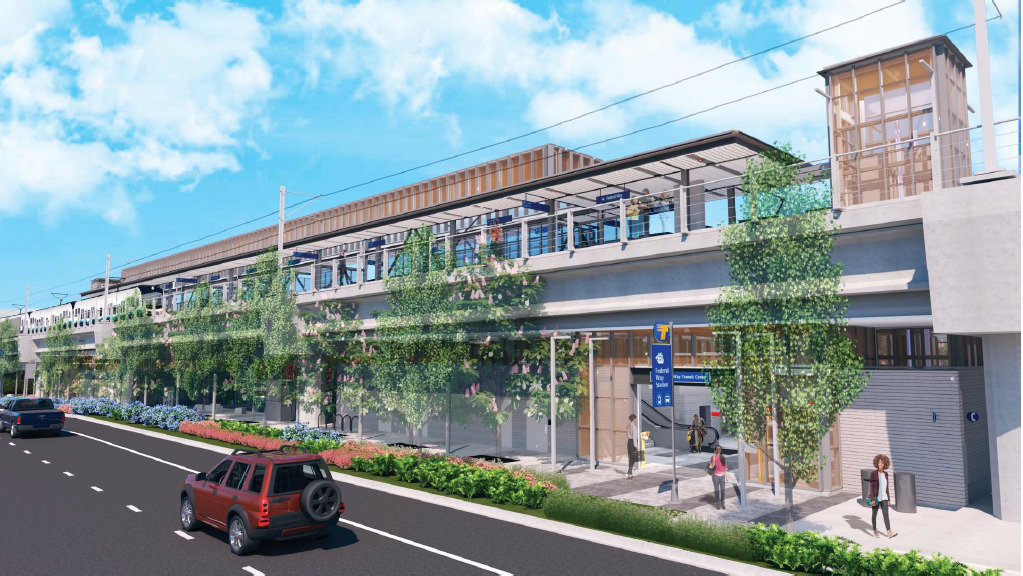
Seattle, Washington and Washington, D.C.  – The Federal Way Link Extension (FWLE) project has earned an Envision Platinum Award from the Institute for Sustainable Infrastructure (ISI).  This recognition, the highest possible Envision award level, was received for the project’s achievements related to sustainable transportation, mobility and access, stakeholder engagement, infrastructure integration, and multiple other areas of sustainability. FWLE is only the seventh transit project in the U.S. to earn Envision Platinum.

The project extends light rail transit service 7.8 miles further south into King County and is part of a larger transit expansion in the Seattle metropolitan area, recognized as one of the most ambitious in the nation at present. FWLE demonstrated through its submission how the project responds to the specific needs of both host and adjacent communities to support sustainability, equity, and resilience.

Quotes

“This award is a testament to Sound Transit’s long and deep commitment to sustainability and to the high levels of collaboration achieved with our project partners during challenging times,” said Sound Transit Chief Executive Officer Goran Sparrman. “We are proud of this achievement and look forward to many more sustainability milestones as we build public transit that connects our region to the places we live and work.”

“As a global leader in infrastructure, Parsons is transforming the rail and transit sector by providing innovative, tailored solutions that modernize transportation systems and deliver long-lasting, sustainable benefits to our clients,” said Mark Fialkowski, president, Infrastructure North America for Parsons. “Our contribution to the Federal Way Extension project represents Parsons’ combined engineering expertise and enterprise-wide commitment to sustainability. We are honored to be part of the team that achieved this award by creating a lasting, valuable public asset for the region and community.”

“Kiewit is proud to be the design-build contractor for Sound Transit’s Federal Way Link Extension, a project that showcases innovation in sustainable infrastructure. Strong partnerships, particularly with the community, are essential to our success,” said Kiewit Corporation Executive Vice President Doug Glaser.  “We would not be able to accomplish what we did without the remarkable people we had on the team, including the 400 local union tradespeople and the 200 subcontractors and suppliers who came together with our construction and engineering staff to achieve a common goal.” 

“We are honored to present the Envision Platinum award to the Federal Way Link Extension project, recognizing its outstanding commitment to sustainability, equity, and resilience,” said Kristi Wamstad, ISI’s Verification Director. “This achievement underscores the project team’s dedication to creating a transit system that prioritizes environmental stewardship and social equity while meeting the needs of the community.”

The project in brief

FWLE expands regional light rail south from Seattle-Tacoma International Airport (SeaTac) to Des Moines, Kent and Federal Way in King County, Washington. The route follows Interstate Freeway 5, from Angle Lake Station in the city of SeaTac, terminating at a new station — Federal Way Downtown (FWDS). Studies along the project corridor established the need for reliable, efficient peak and off-peak transit service to connect with the region’s growth centers. The corridor also has a high concentration of transit-dependent populations who need efficient and reliable regional transit connectivity, which FWLE directly addresses.

The line will include at-grade, retained fill, retained cut, and elevated structure guideway types. Construction of interim stations will be necessary, for continuity of service, at Kent/Des Moines, just south of the existing Angle Lake Station, and at South 272nd Street located to the north of FWDS. In addition, a maintenance facility will be constructed adjacent to FWDS to be used for vehicle inspection and interior cleaning. Parking, bus stops, and bike lockers and racks will be provided at the stations and other locations, further contributing to the project’s role in expanding mobility and improving connections to the regional multimodal transportation system. FWLE is forecast to be completed in 2026 and to raise ridership to approximately 29,000 – 34,000 daily riders.

LIGHT RAIL TRANSIT: Downtown Redmond Link Extension

Opening day celebrations for the Downtown Redmond Link Extension were held on May 10, 2025. Photos courtesy of Sound Transit.

Sound Transit’s new light rail project that will bring service to downtown Redmond, Washington, has been awarded an Envision Platinum Award, with sustainable achievements across five areas of Envision. Sound Transit is building the extension with parters who include Jacobs (Lead Design Firm), Stacy and Witbeck/Kuney, a Joint Venture; WSP, Hatch LTK, Hensel Phelps, and Modern Railway Systems.

The Downtown Redmond Link Extension Project (DRLE) is a 3.4-mile light rail extension that includes new surface and elevated guideway structures, stations at Marymoor Village and Downtown Redmond, a parking garage, and associated utility, drainage, environmental, and roadway improvements. Currently under construction, this project will extend Sound Transit’s 2 line from the future Redmond Technology Station providing residents and commuters in Redmond with direct light rail service to Overlake, Bellevue, Mercer Island, downtown Seattle, the University of Washington, Northgate, Lynnwood, SeaTac Airport and Federal Way.

MARCH 2026 UPDATE: The Downtown Redmond Link Extension successfully completed the post-construction review—the final stage of the Envision verification process—confirming its award level.

QUOTES

“Doing this well on the first attempt at Envision verification is testament to Sound Transit’s long and deep commitment to excellence in sustainability,” said Kimberly Farley, Sound Transit Chief System Officer. “We are proud of this achievement and look forward to continuing our work to provide environmentally friendly public transit that connects people throughout the Puget Sound region to where they live, work and play.”

“SWK and Jacobs are excited to achieve Envision Platinum for the Sound Transit Downtown Redmond Link Extension project. Exceeding the original goal of Envision Silver and earning Envision Platinum recognition is a testament to the collective vision of Sound Transit, WSP, SWK and Jacobs and their pursuit of continual sustainability improvement,” said Zach Adams, SWK Deputy Project Manager. “We are very proud to be a part of this tremendous effort to advance more sustainable and resilient infrastructure and deliver a project that adds lasting value to the region.”

“We are pleased to announce an Envision Platinum Award for the Downtown Redmond Link Extension project. The high level of stakeholder engagement, the emphasis on renewable energy sources, and the importance given to protecting the environment during construction are among the sustainable achievements that have set this project apart,” said Melissa Peneycad, ISI managing director.

Sound Transit’s commitment to sustainability extends throughout its operations with a focus on enhancing the region’s quality of life by reducing car trips with more transit ridership; supporting smart regional growth; fostering transit-oriented development and improved transit access; designing and building more sustainable projects; and operating vehicle fleets more efficiently. With the aim of continual improvement, the agency has an Environmental and Sustainability Management System that centers on accountability for controlling environmental impacts, maintaining compliance with environmental laws and regulations, and demonstrating performance improvement. More information on Sound Transit’s sustainability achievements and targets is available ono the agency’s website.

Here is a short summary of the sustainability achievements on this project.

VERIFIED SUSTAINABILITY ACHIEVEMENTS

Providing sustainable transportation options.

The DRLE project is a mass transportation project that extends light rail to previously unserved communities. Encouraging the use of sustainable transportation is inherent to the project’s objectives. The project expands the existing multimodal transportation system in the region by providing connections to many sustainable, high-capacity transportation options, including train, ferry, bus, monorail, and streetcar, making it easier, faster, and affordable to get around. In addition, the project provides convenient access to pedestrian and biking trails.

Empowering communities through meaningful engagement.

The project team’s stakeholder engagement process has aimed to empower people to engage in the project planning and design process to ensure their needs are met and their voices are heard. Outreach tools have included briefings, public meetings and hearings, mailings, fact sheets, community events, an online comment database, a webpage, and news media. Hosted in-person and online open houses, neighborhood information sessions, and surveys have been used to provide updates and gather input.

Project information has been translated into many languages and disseminated, and Sound Transit also subscribed to a translation and interpretation service. Outreach to more than 50 community organizations occurred, many of which provided important input throughout project planning and design. Stakeholder comments were incorporated into the design of the project, especially those related to enhancing public space and amenities such as bike parking, the design of the pedestrian and bike trails connecting to the project, and the design of the station plazas that will be enhanced by integrated artwork.

“Sound Transit and its project partners have demonstrated that when an inclusive, representative group of stakeholders is meaningfully engaged throughout project planning and design, the project can satisfy the broadest swath of the community and improve sustainable performance,” said ISI’s Melissa Peneycad.

Using renewable energy.

Sound Transit has committed to making all facilities and all electricity carbon-neutral by 2030. To deliver on that objective, Sound Transit is pursuing three main strategies: investing in energy efficiency for existing and new facilities, including DLRE stations; purchasing cost-effective renewable energy through programs such as Long-Term Carbon Free Energy Service Agreements and Puget Sound Energy’s (PSE) Green Direct Program; and the development of on-site renewable energy installation.

PSE is providing all the DRLE project’s energy needs. DLRE is in a 10-year contract with PSE’s Green Direct Program, in which the light rail system will run on 100% carbon-free electricity.

Improving the quality and reliability of infrastructure services.

The DRLE project increases transit options while cutting travel time for people living and working in the region. The project provides new operating capacity in the transportation system by extending light rail to the southeast and downtown Redmond.

Current transit in the project’s vicinity is unreliable due to congestion on local arterials and I-90. The DRLE project will increase the quality and reliability of infrastructure services by reducing people’s dependency on a single mode of transit.

Protecting the environment.

The DRLE project has taken many steps to protect the environment, including:
— Building elevated guideways or retained fill guideways instead of fill slopes reduces impacts on wetlands.
— Creating, enhancing and restoring wetlands in a site adjacent to the project.
— Enhancing riparian planting along the Sammamish River.
— Reclaiming brownfields by using a combination of active and passive measures to remove contamination from a portion of the site.
— Utilizing an integrated pest management plan to reduce the use of toxic and hazardous chemicals in the environment.
— Implementing a soil protection and restoration plan to ensure soil health in the project area.

PROJECT DETAILS AT-A-GLANCE
Envision-Verified Project: Downtown Redmond Link Extension
Location: Redmond, Washington
Envision Rating: Platinum
Owner: Sound Transit
Project Delivery: Design Build
Lead Envision Firm: Jacobs
Project Partners: Jacobs (Lead Design Firm); Stacy and Witbeck/Kuney, a Joint Venture (Design-Build Contractor); WSP (Design Build Project Manager); Hatch LTK (Systems Design Lead); Hensel Phelps (Stations and Parking Garage Subcontractor); Modern Railway Systems (Systems Subcontractor)
Award Date: December 8, 2022
Project Phase: Under construction

For More Information: Visit the project website.
Download the Project Profile & Award Announcement

SUBWAY INFRASTRUCTURE: Times Square Shuttle Project


The Times Square Shuttle project in the Midtown Manhattan area of New York City has earned an Envision Verified Award for its efforts to produce sustainable, equitable, and resilient outcomes. This project was designed to reconstruct the existing Times Square / Grand Central (42nd Street) Station and alleviate deficiencies affecting operations, circulation, and customer safety. This involved converting the existing shuttle operations from three tracks down to two tracks, which included widening the associated platforms; reconfiguring the column framing, stairways, control areas, and signal systems; adding a removable platform bridge with an underpass; adding new safety railings and turnstiles; and rehabilitating architectural, structural, electrical, mechanical, fire, and communication systems.

The project team chose to use the Envision Sustainable Infrastructure Framework, which was designed to promote more sustainable, resilient, and equitable infrastructure projects, as a way to recognize the project’s endeavors. Envision is comprised of 64 sustainability and resiliency indicators (called credits) which are organized within five categories: Quality of Life, Leadership, Resource Allocation, Natural World, and Climate and Resilience. Together, the categories and credits address materials, energy, conservation, community development, planning, collaboration, human well-being, mobility, and more. Here are just two example below:

Enhancing Public Space & Local Character – Previously, stakeholders reported that the Times Square station offered only limited, cramped street access to the station below. This project reconfigures platforms and columns to increase public space, thus providing more efficient mobility for passengers and more room to appreciate the enhanced aesthetics of the station. Originally opened in 1904 as two of the original NYC Subway Stations, both the Times Square and Grand Central ends of the 42nd Street corridor maintain many of their original historic fixtures and finishes, which this project not only preserved, but restored. However, the Times Square neighborhood itself has evolved significantly since 1904 – known today for its bright lights and flashy aesthetics – and the project team sought to bring some of that character down into the station with updated lighting and new unique and colorful artwork.

Improving Sustainable Community Mobility – The Times Square Shuttle project improves access to public transportation and alleviates congestion to provide better connections to jobs, education, and other critical community services. Prior to construction, the subway’s entrances and corridors were too narrow, creating problems for accessibility, efficiency, and safety. By reconfiguring the subway platforms and adding more subway cars, this project expands access and mobility, in compliance with the Americans with Disabilities Act guidelines, to simplify transportation for customers between the city’s busiest transit hubs. The new operation will alleviate circuitous paths and increase total peak-hour train capacity by 20 percent. By improving accessibility and connections at this busy station, this project encourages more sustainable mass transportation by enhancing the quality and efficiency of MTA’s overall transportation network.

To discover more about this project’s sustainability accomplishments, visit the full profile profile.